
Oral Historian for the Day
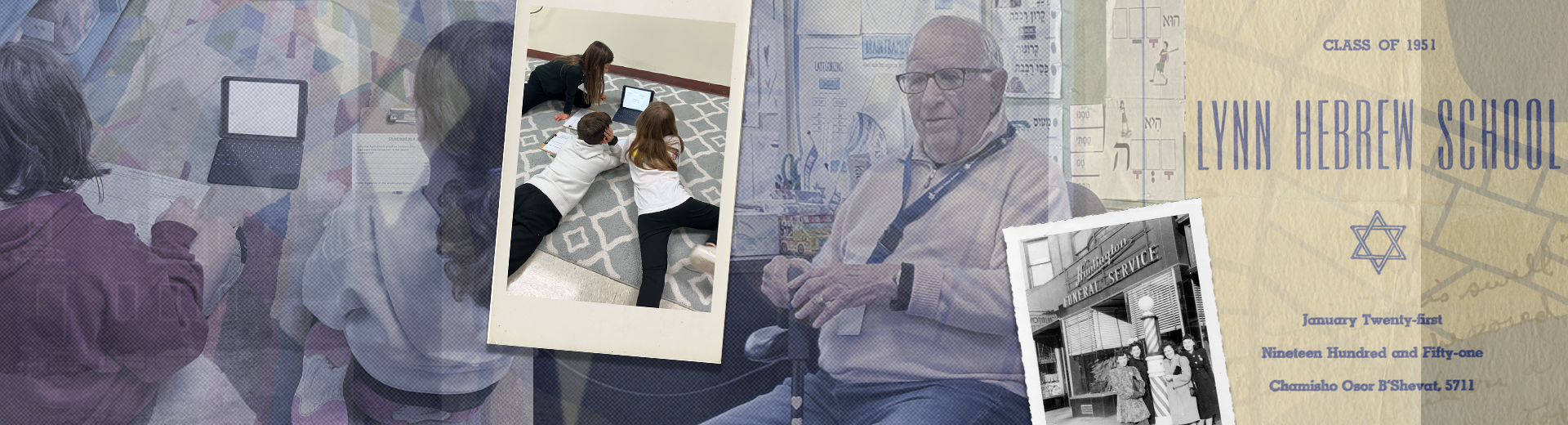
Oral Historian for the Day
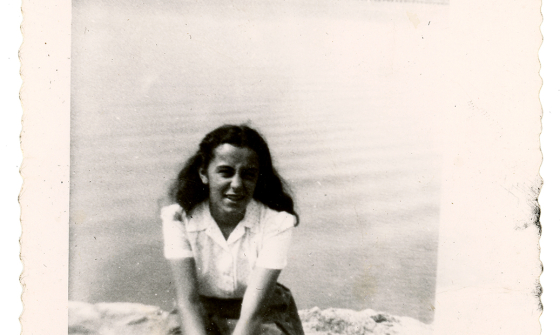
"My father always had an accent, but I didn’t know that. Somebody called it to my attention years later, saying, “Your father has an accent.” I said, “No, he doesn't.” But with my grandmother, she thought she was speaking English, and because I was used to hers—but I would have people say, “What is she speaking?” It was a combination of English and Yiddish..."
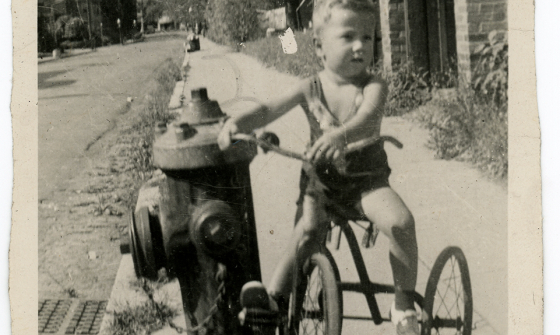
"The old people all spoke Yiddish. In fact, I assumed at some age, and I don’t know what age it was, that every woman had gray hair and tied it in a bun, in the back, and spoke Yiddish. Why she forgot English and spoke Yiddish, I don’t know, but I guess all the older women I knew spoke Yiddish. Instead of thinking that was their language, I just thought everybody spoke Yiddish when they got older! I do remember that. So, I kind of grew up bilingual..."
Your name
Family member’s name
Date of interview
Location of interview
Topic of the interview
Example: “This is Susie Smith. I am interviewing Jane Smith on January 1, 2026, at Jane Smith’s home in Boston, Massachusetts. Today we’re talking about her childhood in Chelsea, Massachusetts.”
Your name
Family member’s name
Date of interview
An expression of gratitude
Example: “This concludes my interview with Jane Smith on January 1, 2026. This is Susie Smith, and I want to thank Jane for spending time with me today.”
Interviews can consist of biographical and thematic questions.
Biographical questions are personal questions aimed to get to know the interviewee as a person: Where were you born? Who were you named after? What was your favorite subject in school? The interviewee can narrate their life story by sharing and describing memories to the interviewer.
Thematic questions are aimed to learn about a specific theme or topic the interviewer is interested in studying, such as immigration, careers, or a specific event in history. A researcher, for example, could interview several veterans to learn about World War II.
There is often overlap between these two types of questions, and that is okay! Oral history is about capturing it all.
After introducing “oral history,” facilitate a discussion about the importance of oral history.
Use the guiding questions below to help.
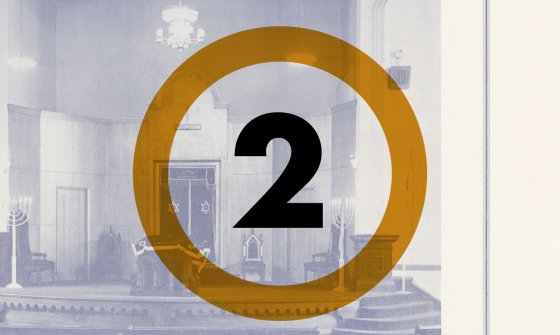
Facilitate a discussion about the difference between open-ended and closed-ended questions, and the advantages and disadvantages of each.
Play the two following example clips.
Explain the difference between biographical and thematic questions. Share examples of each.
Option: Replay the two example clips.
Review expert tips and play example clip of intro and outro statements
Ask students if there is anything about the intro/outro that they notice (and note, if they don’t, that the outro needs to include where the interview happened!)
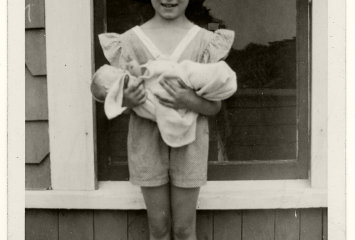
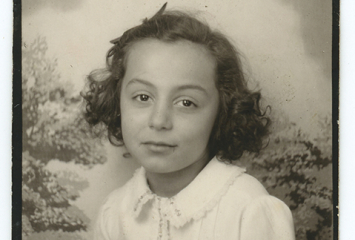
Let students choose who they interview. They can interview anyone they consider part of their family. Ideally, they should prioritize adults who influence their life in some way and who can help answer their research questions.
Have students conduct two interviews, one with biographical questions and one with thematic questions. Set up and debrief each interview separately. For thematic interviews, assign the class a single theme or topic that everyone must learn more about, such as immigration, careers, or a topic in your social studies curriculum. Have students share their results with the class: What did they learn on their own, and what did they learn as a class?
Photographs, heirlooms, or a trip to a childhood home can enrich an interview by triggering emotions and memories. The accuracy of information obtained from an interview depends on the memory of the person being interviewed. Researchers should verify their findings by gathering additional evidence to ensure the information they obtain is accurate. Multiple people can be interviewed to obtain different perspectives of the same experience.
Let students practice interviewing a partner in class.
Give them time to brainstorm four open-ended biographical questions to ask their partner. Have them write their questions on the back of an Interview Guided Practice Log.
Give students time to conduct their interview in class.
Check for understanding by reviewing their questions and by listening to their interviews.
Facilitate a conversation about the process they used for conducting interviews.
Students will now plan to interview a family member. If you are following the American Ancestors Family History Curriculum, tell them this is part of Step 4: Research and Document of the Genealogy Research Process.
Give them time to brainstorm questions to ask their family members. They should record them in their Interview Research Log.
Review expert tips for conducting interviews, such as asking follow-up questions to foster a conversation.
Give students a deadline to complete their interviews.
Use these questions to debrief their research process.
Students will connect their findings with other sources to result in a final project.
If following the American Ancestors Family History Curriculum, this will lead to the “What Does This Mean? Final Project.”
Thank you for visiting! Please consider supporting the Jewish Heritage Center’s work to preserve, explore, and advance understanding of Jewish history and heritage.
Donate Now