JHC Immigration Hero
Subject Guide – Immigration
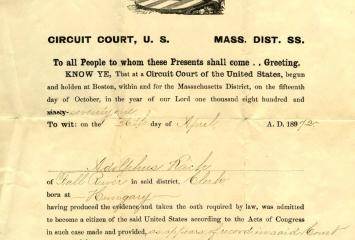
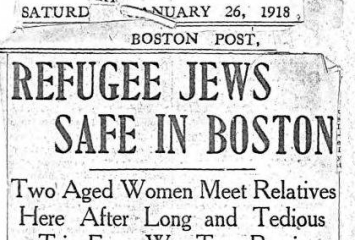
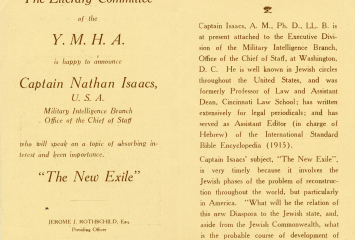
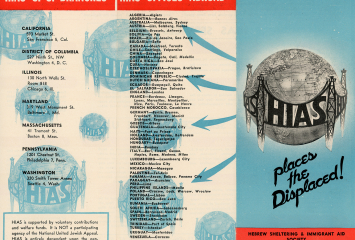
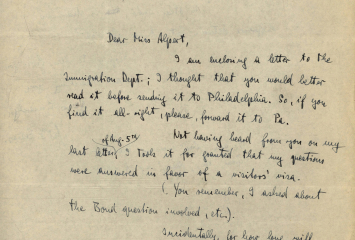
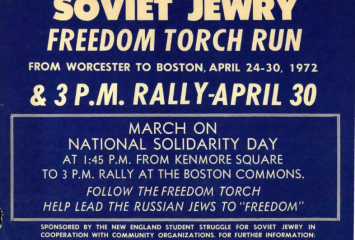
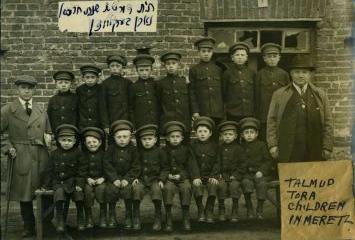
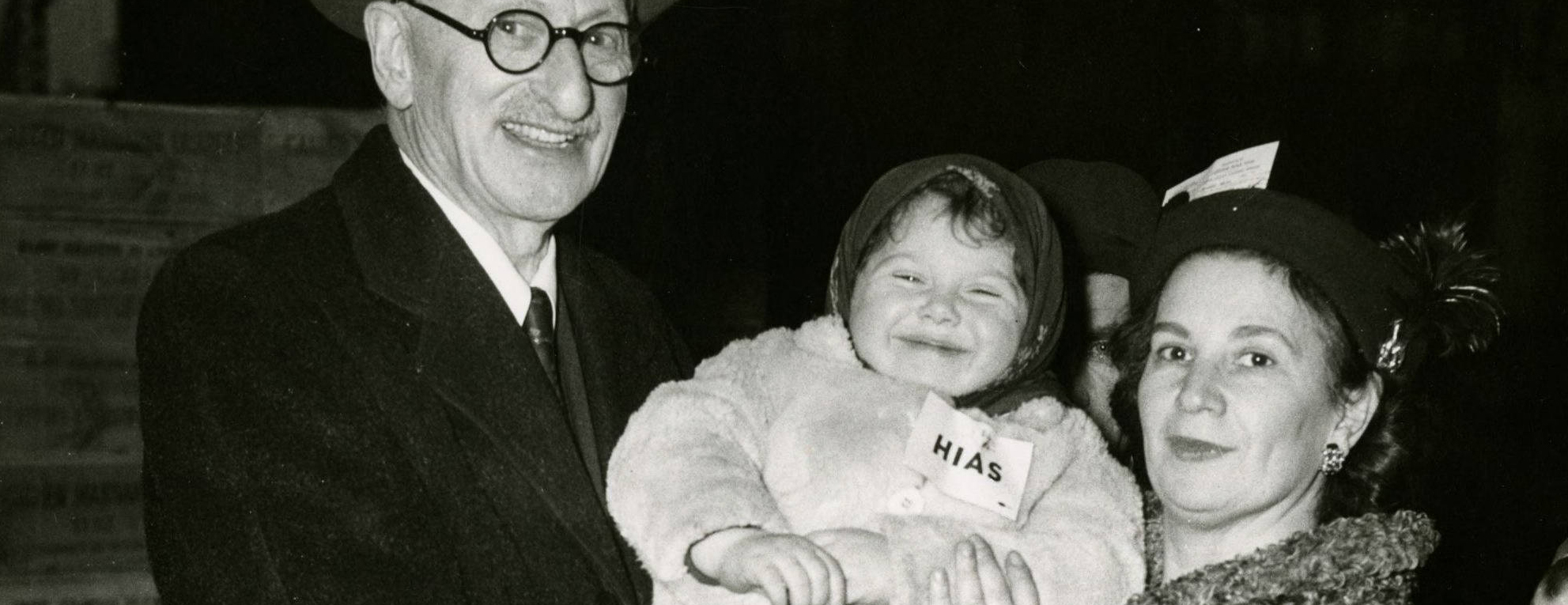
The history of American Jewish immigration begins in September 1654 when 23 Jewish men, women, and children arrived in New Amsterdam, now New York City. Historians have identified three periods of Jewish immigration to the United States: Sephardic (beginning in 1654); German (beginning in the 1840s); and Eastern European (beginning in the 1880s). The majority of JHC collections come from the Eastern European period of immigration. Between 1880 and 1924, when the United States’ Johnson-Reed Act enacted restrictive immigration quotas, nearly three million Jews made their way from Eastern Europe to America, fleeing poverty, war, discrimination and violent antisemitic pogroms. Materials in the JHC’s collections help reveal the journeys and lived realities of immigrant communities. Collections also focus on advocacy including the Hebrew Immigrant Aid Society (HIAS) chartered in 1904, responses to the plight of refugees from Nazi-occupied Europe, and the Soviet Jewry movement in the United States, when multiple Jewish organizations advocated for the rights of Soviet Jews to immigrate to the U.S. and Israel.

America and the Holocaust
The American Jewish Experience through the Nineteenth Century: Immigration and Acculturation
The Center for Jewish History and Partner Organizations
Eastern European Immigrants in the United States
Essential Readings in American Jewish History
Finding Arrival Records Online
From Haven to Home: 350 Years of Jewish Life in America
Immigration Timeline
Jewish Immigration to America: Three Waves
Records Relating to World War II Era Refugees
Timeline in American Jewish History
The United States Holocaust Memorial Museum
Thank you for visiting! Please consider supporting the Jewish Heritage Center’s work to preserve, explore, and advance understanding of Jewish history and heritage.
Donate Now